
A Yoga Teacher Training is only as strong as the people teaching it. Deciding where to train is, in a real sense, deciding who you want to learn from — so here’s a closer look at the faculty guiding students through their training at Rishikesh Yogis Yogshala, and what each of them actually brings to the classroom.
Uttam Ghosh — Founder
Uttam Ghosh founded Rishikesh Yogis Yogshala in 2014, bringing a teaching background in Hatha Yoga, meditation, pranayama, and yogic philosophy. His own path into yoga began in childhood through the bhakti tradition passed down by his grandfather, later formalized through training that led to his ERYT-500 certification from Yoga Alliance USA. He was initiated into the Kundalini Yoga path under Swami Vidyananda, who gave him the spiritual name “Rishi Raj” — a name that reflects the philosophy he still teaches from today: that yoga is a lifestyle, not just a technique.
What distinguishes Uttam’s teaching approach is the blend of that early, informal bhakti grounding with the structured, formal training that came later. Students often note that his classes carry both technical precision and a genuine devotional quality that’s difficult to manufacture without that kind of lived background in the tradition.
Ritesh Bhatt — Yoga Anatomy & Adjustment Alignment
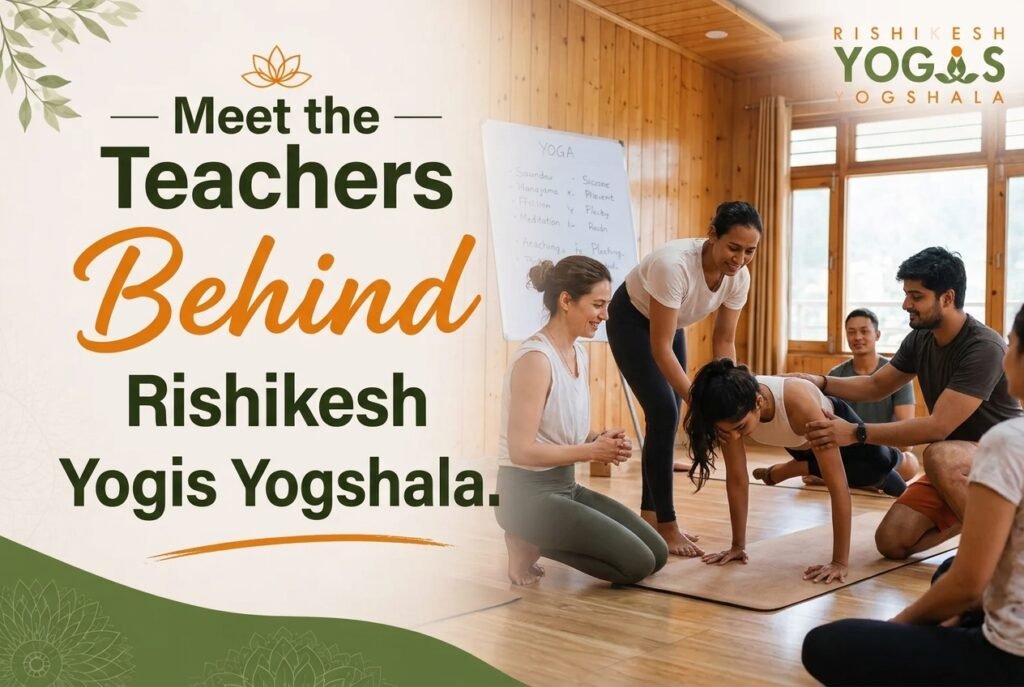
Ritesh brings a specialized focus on yoga anatomy and adjustment alignment to the teaching team — the technical backbone that helps students understand not just how to perform a pose, but why alignment matters and how to safely adjust it for different bodies. This is often the area students find most valuable when they start thinking about how they’ll teach, not just practice.
Anatomy and adjustment work is also where a lot of new teachers feel least confident heading into their first classes — knowing how to safely and effectively adjust a student’s alignment, without causing discomfort or injury, takes dedicated practice under close supervision, which is exactly what Ritesh’s sessions are structured around.
Deepak — Traditional Hatha Yoga
Deepak teaches traditional Hatha Yoga, focusing on the foundational postures and breathing techniques that most other styles are built on. For many students, his classes are where the fundamentals of alignment and breath control really click into place, particularly useful for students who arrived at the training with little to no prior yoga experience.
How the Teaching Team Works Together
Rather than each teacher operating in isolation, the curriculum is structured so that Uttam’s philosophy and meditation sessions, Ritesh’s anatomy and adjustment work, and Deepak’s foundational Hatha instruction build on each other across the course. A concept introduced in a philosophy lecture might reappear in a practical anatomy session the same week, reinforcing the same idea from multiple angles rather than treating each subject as a separate, disconnected module.
Why Faculty Continuity Matters
Training with the same core team throughout your course — rather than a rotating cast of visiting instructors — means your teachers actually track your progress over the weeks, catch the same alignment habits repeatedly, and adjust how they teach you specifically rather than delivering the same generic instruction to everyone in the room.
This continuity also means that by the final week of practicum teaching, your instructors already know your strengths and where you need support, which produces more targeted, useful feedback than a teacher meeting you for the first time in your final week ever could.
What Students Say About Learning From This Team
Feedback from past students consistently points to the same theme: the difference between watching a pose demonstrated and having a teacher who’s tracked your specific progress correct your alignment week over week. That kind of individualized attention is difficult to deliver at scale, which is part of why keeping class sizes manageable and faculty consistent throughout the course is treated as a priority rather than an afterthought.
Continuing Education and Growth
The teaching team’s own education doesn’t stop at their existing certifications — like any serious teaching faculty, continued study, deepening practice, and further training are ongoing, which keeps the curriculum current rather than static. Students training with a faculty that’s actively continuing to grow generally benefit from teaching that reflects current best practice, not just a fixed syllabus taught the same way for a decade.
If you have specific questions about who you’ll be learning from before you enroll, reaching out directly is always worth doing — knowing your teachers before you arrive tends to make the first days of an intensive training feel considerably less unfamiliar.
Ultimately, choosing a school is choosing a teaching team as much as a curriculum on paper. We’d encourage any prospective student to ask specifically who they’ll be learning from, how long that faculty has been teaching together, and whether that continuity is something the school treats as a genuine priority — the answers tell you a lot about what your actual training experience will be like.
FAQs
Who founded Rishikesh Yogis Yogshala?
Uttam Ghosh founded the school in 2014 and remains the lead teacher, holding ERYT-500 certification from Yoga Alliance USA.
Are the teachers Yoga Alliance certified?
Yes — the teaching faculty holds Yoga Alliance recognized certifications appropriate to the courses they teach.
Will I have the same teachers throughout my course?
Training with a consistent core faculty rather than rotating visiting instructors is part of how the program is structured, which allows teachers to track individual student progress over the full course.