
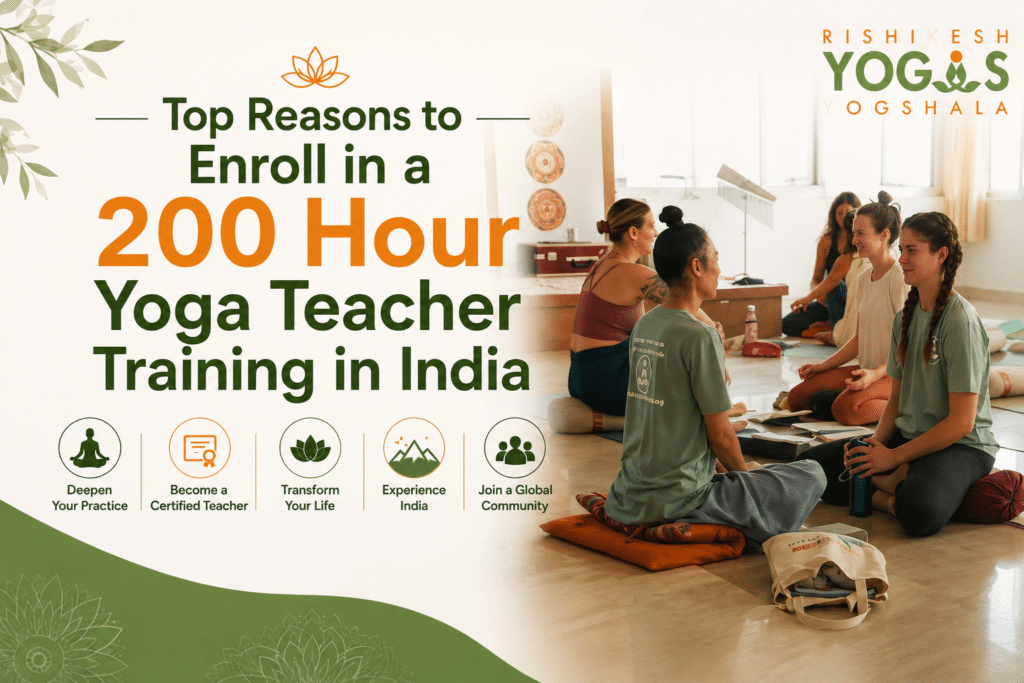
Yoga pulls people toward India for a reason that goes far beyond postures on a mat. It offers a chance to slow down, question old habits, and rebuild a daily rhythm around breath, movement, and stillness. At Rishikesh Yogis Yogshala, students arrive as curious travelers and leave as confident teachers who understand yoga from the inside out. The transformation doesn’t happen by accident it happens because the training strips away distractions and puts you face to face with your own practice, your own mind, and your own potential.
Key Takeaways
- A structured, immersive program builds real teaching skills, not just flexibility
- Daily discipline reshapes habits around sleep, food, and mental clarity
- Traditional Indian teaching methods connect students to yoga’s authentic roots
- Certification opens doors to teaching, travel, and a new career path
- The experience builds lasting confidence, community, and self-awareness
A 200 hour yoga teacher training in india packs an entire lifestyle shift into three to four intensive weeks. Students wake before sunrise, practice asana and pranayama on empty stomachs, study anatomy and philosophy through the day, and close each evening with meditation or chanting. This routine doesn’t just teach postures — it rewires the body’s internal clock and trains the mind to stay present. Anyone who completes a 200 Hour Yoga Teacher Training in India walks away with a teaching certification recognized by Yoga Alliance, along with a level of self-discipline that carries into every corner of daily life long after the course ends.
Why India Remains the Heart of Yoga Training
Yoga originated in India thousands of years ago, and the country still holds the deepest wells of authentic teaching. Training here connects students directly to the source rather than a diluted, studio-adapted version taught elsewhere. Rishikesh, often called the Yoga Capital of the World, sits on the banks of the Ganges river, surrounded by the Himalayan foothills. That setting alone does something a gym studio never could: it quiets the mind and creates space for genuine transformation.
Teachers in India often carry generations of traditional knowledge passed down through lineages of gurus. They teach yoga not as a workout but as a complete science covering breath control, meditation, ethical living, and self-inquiry. Training in this environment gives students a fuller, richer understanding of the practice than a weekend certification course back home ever could.
Building Skills That Go Beyond the Mat
A strong training program doesn’t just certify students to lead a vinyasa flow. It builds teaching skills systematically. Students learn how to sequence classes safely, adjust postures for different body types, explain anatomy in simple terms, and hold space for a room full of strangers. They practice public speaking, receive feedback from senior teachers, and teach real classes before they graduate.
This kind of hands-on training matters because teaching yoga well requires more than personal practice. It requires the ability to observe, communicate, and adapt. Anyone searching for the Best 200 Hour Yoga Teacher Training in India should look for a curriculum that balances physical practice with genuine teaching methodology — not just extra hours of asana.

The Daily Discipline That Resets Habits
Waking at 5 or 6 a.m. every day for a month sounds intimidating, but most students find it becomes second nature within a week. The body adjusts to earlier sleep, lighter meals, and consistent movement. Many report clearer thinking, better digestion, and steadier moods by the halfway point of the course.
This discipline doesn’t disappear once the certificate gets handed out. Graduates often carry the same morning routine home, along with a renewed relationship to food, rest, and screen time. A 200 Hour Yoga Teacher Training Course in India essentially functions as a reset button for anyone stuck in an unhealthy or scattered routine.
Philosophy, Meditation, and Inner Work
Asana makes up only one limb of yoga’s eight-limbed path. A quality training spends real time on philosophy, teaching students about texts like the Yoga Sutras and the Bhagavad Gita, along with meditation techniques, breathwork, and ethical principles like ahimsa and satya. This portion of the training often produces the biggest personal shifts.
Students frequently describe moments of emotional release during meditation sessions or group discussions. Living in close community with fellow trainees, away from phones and daily obligations, tends to surface old patterns and unresolved feelings. Working through them in a supportive setting builds emotional resilience that outlasts the course itself.
A Certification That Opens Real Doors
Completing a 200 Hour Yoga Certification India program qualifies graduates to register with Yoga Alliance and teach professionally almost anywhere in the world. Many alumni go on to lead classes at studios, gyms, retreat centers, or online platforms. Others use the certification as a stepping stone toward advanced 300-hour training or specialized courses in yin, prenatal, or therapeutic yoga.
Beyond the professional angle, this certification signals a level of commitment and knowledge that sets teachers apart. Studios and retreat centers increasingly look for instructors trained in India, valuing the depth and authenticity that comes with that background.
Community and Connection
Training alongside a small group of dedicated students creates bonds that rarely form in everyday life. Shared early mornings, shared struggles with difficult poses, shared breakthroughs during meditation — these experiences build friendships that often continue long after the course wraps up. Many graduates stay in touch with their cohort for years, supporting each other’s teaching journeys and returning to India together for advanced training.
This sense of community adds a layer of value that goes beyond the certificate itself. It gives graduates a network of like-minded people scattered across the globe, all connected by the same transformative experience.
Anyone weighing a Yoga Teacher Training in India against options closer to home should consider what gets gained by stepping fully outside a familiar routine. Rishikesh Yogis Yogshala is one of the oldest yoga schools in Rishikesh, offering traditional Yoga Teacher Training in Rishikesh, India. The school combines authentic yogic teachings with experienced instructors, a structured curriculum, and a supportive learning environment to help students build a strong foundation in both personal practice and professional teaching. Whether you’re beginning your yoga journey or preparing for a teaching career, Rishikesh Yogis Yogshala offers guidance in choosing the right course and training dates to match your goals.
Frequently Asked Questions
1. Do I need prior yoga experience to join a 200 Hour Yoga Teacher Training in India?
No. Most programs welcome beginners and experienced practitioners alike. Instructors adjust guidance based on each student’s current ability, so a consistent personal practice matters more than years of experience.
2. How physically demanding is the training?
Days involve multiple yoga sessions along with lectures and meditation, so stamina builds gradually. Students who arrive with basic fitness typically adjust within the first few days.
3. What certification do graduates receive?
Graduates receive a 200-hour certificate registered with Yoga Alliance, allowing them to teach yoga classes internationally under the RYT-200 designation.
4. What should I pack for training in Rishikesh?
Lightweight, breathable clothing, a journal, a reusable water bottle, and basic toiletries cover most needs. Yoga mats and props are usually provided by the school.
5. Can this training lead to a career change?
Many graduates transition into part-time or full-time teaching, while others use the skills to deepen their existing wellness or fitness careers. The certification provides a solid foundation either way.