
What’s included in a 200-hour yoga teacher training? At Rishikesh Yogis Yogshala, the 24-day course covers daily asana, pranayama and meditation, yoga philosophy, anatomy basics, teaching methodology and practice teaching, and it ends with a practical teaching assessment and no written exam. This guide lists what you get, what to check before you book, and what to ask any school.
For dates, availability and the current fee, see our 200-hour yoga teacher training in Rishikesh page.
Key takeaways
- The course runs for 24 days.
- Training covers asana, pranayama, meditation, philosophy, anatomy, teaching methodology and practice teaching.
- The course ends with a practical teaching assessment. There is no written exam.
- Meals are vegetarian and sattvic-inspired. Tell us about any allergy before you arrive.
- Always confirm accommodation, extras and requirements in writing before you pay.
What is a 200-hour yoga teacher training?
A 200-hour yoga teacher training is a structured course that teaches you both to practise and to teach yoga. It is the standard first level of teacher training. Our school is registered with Yoga Alliance as an RYS 200 and RYS 300 school. Graduates can apply to register as 200-hour teachers with Yoga Alliance, subject to its own requirements and fees.
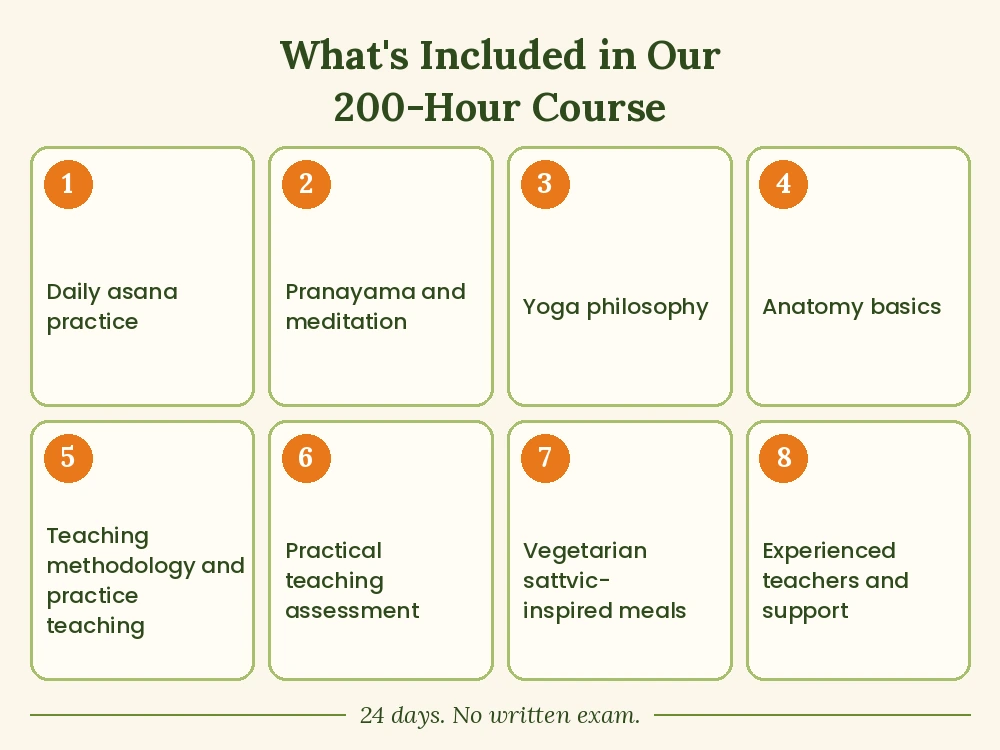
8 things included in our 200-hour course
1. Daily asana practice
Every day includes guided asana in the traditional Hatha style, with attention to alignment, breath and safe progression. Beginners and returning students practise together, with options for different levels. NCCIH notes that yoga is generally considered safe for healthy people when practised under the guidance of a qualified instructor; see its page on yoga: effectiveness and safety.
2. Pranayama and meditation
Pranayama (breathing practice) and meditation are part of the daily routine. You learn the techniques and how to teach them in a simple and careful way. See our post on the benefits of a 200-hour yoga teacher training for how these fit together.
3. Yoga philosophy
The course introduces yogic philosophy, so the postures are understood within the wider tradition. Our founder, Uttam Ghosh, teaches yoga philosophy and pranayama.
4. Anatomy and physiology basics
Teachers need to understand how the body moves. Anatomy sessions explain joints, muscles and common limits, so that you can guide students safely. Anil teaches yoga and anatomy.
5. Teaching methodology and practice teaching
You learn how to plan, sequence and teach a class, then practise teaching with feedback. Read more on how practice teaching builds confidence.
6. A practical teaching assessment
The course ends with a practical teaching assessment. There is no written exam. In the assessment, you teach a yoga class. The school prepares you for it through teaching practice and guidance during the course.
7. Vegetarian sattvic-inspired meals
Meals are vegetarian, freshly prepared and sattvic-inspired, meaning simple and easy to digest. This is not a promise of a fully vegan menu. If you have an allergy or dietary need, tell us before you arrive. A typical day may include oat porridge, seasonal fruit and traditional Indian breakfast dishes, then rice, dal, seasonal vegetables and fresh salad at lunch, afternoon tea with light refreshments and a freshly prepared Indian vegetarian dinner. Please tell the school about any food allergy or dietary need in advance, preferably before you arrive, so the kitchen has time to prepare. Alcohol and smoking are strictly prohibited at the centre.
8. Teachers and support
You are taught by our founder, Uttam Ghosh, and our team of teachers. Our team also includes Deepak (Vinyasa Flow), Ram (mantra chanting), Shivam (yoga) and Anil (yoga and anatomy). Wi-Fi is available, and phones are not used during sessions.
Accommodation and non-residential options
A non-residential option is available for students who arrange their own stay. Students enrol in the core course and arrange their own accommodation, and a reduced fee applies when accommodation and meals are excluded. Ask us about room options when you enquire.
What is usually not included
Check these with us before you book, so there are no surprises:
- Airfare and visa fees
- Airport pickup
- Personal expenses and laundry
- Optional treatments, such as an Ayurvedic consultation
Requirements to join
Many schools ask for some prior practice. Ours welcomes serious students, and the best way to know if you are ready is to ask. If you are new to yoga, our 100-hour course may be a gentler first step.
Questions to ask any yoga school
- How many days is the course, and what is the daily schedule?
- Who teaches, and what are their qualifications?
- How many students are in each group? Our 200-hour course has a maximum of 15 students.
- What exactly is included, and what costs extra?
- How are you assessed?
- What are the booking and refund terms? Our enrolment deposit is US$150 and is non-refundable if you cancel. The balance can be paid by bank transfer, in cash on arrival or by another online transfer.
Ready to book?
To check dates and book your place, visit our 200-hour yoga teacher training in Rishikesh page or contact us with your questions.
Frequently asked questions
What is included in a 200-hour yoga teacher training? Daily asana, pranayama and meditation, yoga philosophy, anatomy basics, teaching methodology, practice teaching, a practical teaching assessment, and vegetarian sattvic-inspired meals. Check accommodation and extras with us.
How long is the 200-hour course in Rishikesh? Our course runs for 24 days. See the Fees and Schedule page for current dates.
Is food included? Yes, meals are vegetarian and sattvic-inspired. Please tell us about any allergy before you arrive.
Is there a written exam? No. The course ends with a practical teaching assessment.
Do I need to have practised yoga before? If you are new to yoga, ask us whether the 100-hour course suits you better.
Will I be able to register with Yoga Alliance? Our school is registered with Yoga Alliance, and graduates can apply to register as 200-hour teachers, subject to its own requirements and fees.