
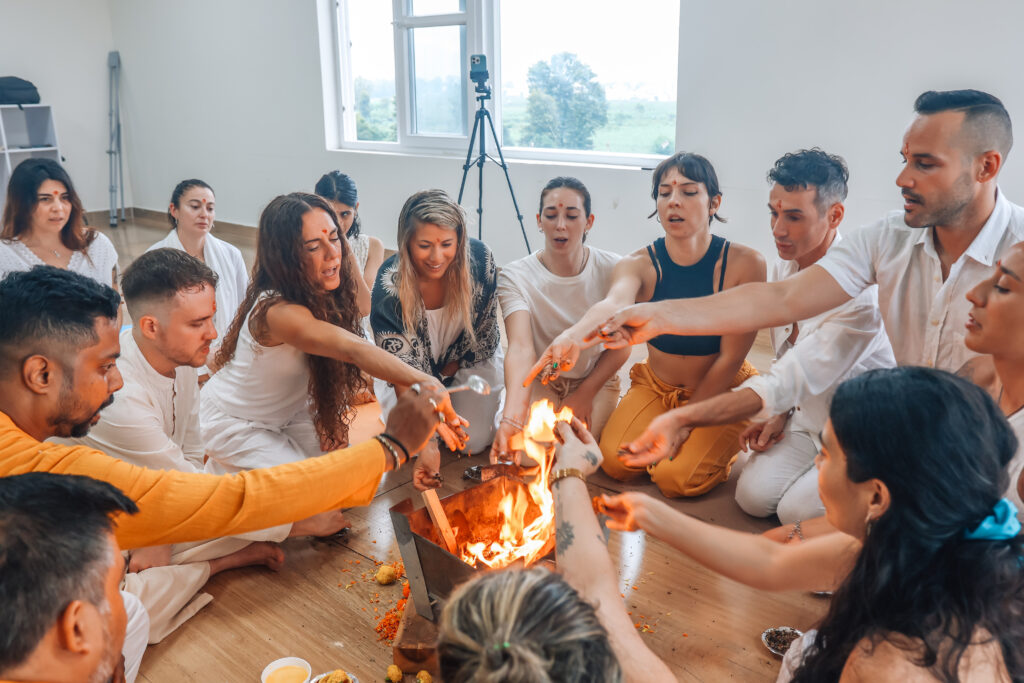
Among the many paths of yoga, Bhakti Yoga is the most heart-centered and accessible.
Bhakti means devotion, surrender, and love. It is the art of offering your entire being
to something higher than yourself, dissolving the ego into pure divine love.
Bhakti is not limited to a temple, a mantra, or a specific deity. It can be directed towards God,
a Guru, your mother, nature, a river, a mountain—anything that awakens deep reverence within you.
Wherever your devotion flows, Bhakti Yoga transforms that love into a bridge to the Divine.
The Essence of Bhakti
———————
When devotion deepens, a powerful transformation occurs: the boundary between the devotee
and the divine dissolves. There is no longer “you” and “that”—there is only oneness.
If your devotion is for Krishna, then in the state of pure Bhakti, you do not remain separate
from him—you become Krishna. His presence vibrates in every cell of your being. Love grows
so strong that the divine flows through you, and you are no longer different from the one you worship.
Nine Forms of Bhakti Yoga: Different Ways to Express Devotion
Bhakti Yoga can be practiced through different expressions of love, faith, and dedication. One traditional explanation describes nine forms of devotion, known as Navadha Bhakti. These practices are associated with the Bhagavata Purana and devotional traditions within Hinduism. Each form provides a different way for a seeker to develop a deeper connection with the Divine.
The nine forms of Bhakti Yoga include:
- Shravana (Listening): Listening to spiritual stories, sacred teachings, and the names of the Divine.
- Kirtana (Chanting): Singing or chanting devotional songs and mantras with faith and devotion.
- Smarana (Remembering): Keeping the Divine in your thoughts through remembrance and meditation.
- Pada Sevana (Service): Expressing devotion through dedicated service and humility.
- Archana (Worship): Offering prayers, flowers, and other devotional offerings.
- Vandana (Prayer): Expressing gratitude, respect, and reverence through prayer.
- Dasya (Servitude): Serving the Divine with sincerity, dedication, and humility.
- Sakhya (Friendship): Developing a loving relationship with the Divine based on friendship and trust.
- Atma Nivedana (Self-Surrender): Offering one’s entire being to the Divine with complete faith and devotion.
These nine expressions show that Bhakti Yoga does not depend on one particular ritual or method. A person can develop devotion through listening, chanting, prayer, service, remembrance, and surrender. The central purpose is to cultivate sincere love and maintain a connection with the Divine through everyday life.
Bhakti as the Fastest Path
————————–
The yogic journey is often compared to climbing a tall building:
– The paths of knowledge, meditation, or self-discipline are like taking the stairs—slow, steady,
and requiring much effort.
– Bhakti Yoga is like entering the lift (elevator): you press the button and rise quickly
to the highest floor.
Such is the power of surrender. Once you offer yourself completely, the divine carries you upward effortlessly.
Bhakti Yoga in the Bhagavad Gita: The Power of Divine Love
The Bhagavad Gita is one of the most important spiritual texts discussing Bhakti Yoga. Through the conversation between Lord Krishna and Arjuna, the Gita explains the importance of devotion, faith, surrender, and performing actions with a spiritual attitude.
Lord Krishna teaches that devotion does not require complicated rituals or expensive offerings. What matters most is the sincerity and love behind an offering. A simple offering made with genuine devotion can carry profound spiritual meaning.
Chapter 12 of the Bhagavad Gita, known as Bhakti Yoga, particularly explains the qualities of a devoted person. Krishna describes a devotee who practices compassion, patience, forgiveness, humility, and freedom from excessive attachment.
The teachings also explain that devotion can become part of everyday activities. Eating, working, serving others, praying, and fulfilling responsibilities can all become expressions of devotion when performed with sincerity and a selfless attitude.
For spiritual seekers, the Bhagavad Gita provides guidance on developing faith, letting go of ego, and cultivating a loving relationship with the Divine. It reminds us that true devotion is reflected not only in prayers but also in our thoughts, behaviour, and actions.
Transformation Through Devotion
——————————-
Bhakti Yoga is not about ritual alone. It is about living in devotion—turning every thought,
word, and action into an offering. When practiced this way, life itself becomes sacred.
Your heart opens, your mind becomes light, and every experience feels connected to the divine.
How to Practice Bhakti Yoga in Daily Life
Bhakti Yoga is not limited to temples, religious ceremonies, or meditation sessions. It can become a natural part of everyday life through simple actions performed with love, gratitude, and sincerity.
You do not need to follow complicated rituals to begin practicing Bhakti Yoga. Developing a genuine feeling of devotion and maintaining a positive attitude toward life can be an important starting point.
Here are some simple ways to incorporate Bhakti Yoga into your daily routine:
1. Begin Your Day with Prayer: Spend a few moments remembering the Divine and expressing gratitude for a new day.
2. Practice Mantra Chanting: Repeating a spiritual mantra or chanting devotional songs can help create a focused and peaceful state of mind.
3. Develop a Habit of Gratitude: Appreciate the people, opportunities, and experiences that bring meaning to your life.
4. Serve Others with Love: Helping someone without expecting anything in return is a meaningful expression of selfless devotion.
5. Read Spiritual Teachings: Spend time reading the Bhagavad Gita or other spiritual texts to understand the deeper principles of devotion.
6. Practice Surrender: Learn to accept situations with patience and trust while continuing to fulfil your responsibilities sincerely.
By following these simple practices, individuals can bring the principles of Bhakti Yoga into their everyday activities. Over time, devotion can become more than a spiritual practice; it can become a way of approaching life with compassion, humility, and love.
The Ultimate Union
——————
At the ultimate stage of Bhakti Yoga, the seeker and the sought are no longer separate.
The lover becomes the beloved, the devotee becomes the deity, and the human merges with the divine.
This is the true gift of Bhakti—union with the source through love.
Frequently Asked Questions About Bhakti Yoga
1. What is Bhakti Yoga, and why is it called the path of devotion?
Bhakti Yoga is a spiritual path centered on love, faith, devotion, and surrender to the Divine. It is called the path of devotion because it encourages individuals to develop a loving connection with their chosen form of the Divine through prayer, chanting, remembrance, and selfless service.
2. Who is the founder of Bhakti Yoga?
Bhakti Yoga does not have one universally recognized founder. Devotional practices developed through ancient Indian spiritual traditions and are discussed in important texts such as the Bhagavad Gita, Bhagavata Purana, and Bhakti Sutras.
3. What are the nine forms of Bhakti Yoga?
The nine traditional forms are Shravana, Kirtana, Smarana, Pada Sevana, Archana, Vandana, Dasya, Sakhya, and Atma Nivedana. They represent different expressions of devotion, including listening, chanting, remembrance, worship, service, friendship, and complete surrender.
4. Is Bhakti Yoga suitable for beginners?
Yes. Bhakti Yoga can be practiced by beginners as well as experienced spiritual seekers. Simple activities such as prayer, mantra chanting, gratitude, devotional music, and reading spiritual teachings can help anyone begin exploring this path.
5. What is the difference between Bhakti Yoga and Karma Yoga?
Bhakti Yoga focuses primarily on devotion and love toward the Divine, while Karma Yoga emphasizes performing one’s responsibilities and actions without attachment to their results. Both paths encourage individuals to move beyond selfish desires and develop a more spiritual approach to life.
6. How can I practice Bhakti Yoga at home?
You can practice Bhakti Yoga at home through daily prayers, mantra chanting, devotional songs, meditation, reading the Bhagavad Gita, and expressing gratitude. Even small activities can become meaningful when performed with sincerity and devotion.
7. What is the ultimate goal of Bhakti Yoga?
The ultimate goal of Bhakti Yoga is spiritual realization through unconditional love, devotion, and surrender. Depending on the spiritual tradition, this may be understood as closeness to the Divine, loving communion, or realization of unity with ultimate reality.