
Is yoga teacher training hard? It is demanding, but it is manageable for most healthy people who prepare. The challenge is less about doing difficult poses and more about the full routine: early mornings, daily practice, study, practice teaching and living in a group, day after day. Knowing what to expect makes it easier.
This guide describes the real demands of a course like our 200-hour yoga teacher training in Rishikesh, and how to prepare. If you are new to yoga, read our post on whether beginners can join a yoga teacher training.
Key takeaways
- The hardest part is usually the routine, not the poses.
- Our 200-hour course runs for 24 days and ends with a practical teaching assessment, with no written exam.
- Tiredness, sore muscles and homesickness in the first week are common.
- Preparing before you arrive and resting properly make a big difference.
- Tell your teachers about any injury or health condition.
So, is yoga teacher training hard?
It depends on your starting point. Someone who practises regularly often finds the poses familiar and the schedule the main change. Someone newer to yoga may find both new. Either way, the course is designed so students learn step by step, with options for different levels.
The US National Center for Complementary and Integrative Health (NCCIH) notes that yoga is generally considered safe for healthy people when practised under the guidance of a qualified instructor. See its page on yoga: effectiveness and safety. That guidance is part of the course, so you do not need to push yourself past your limits.
7 honest things to expect
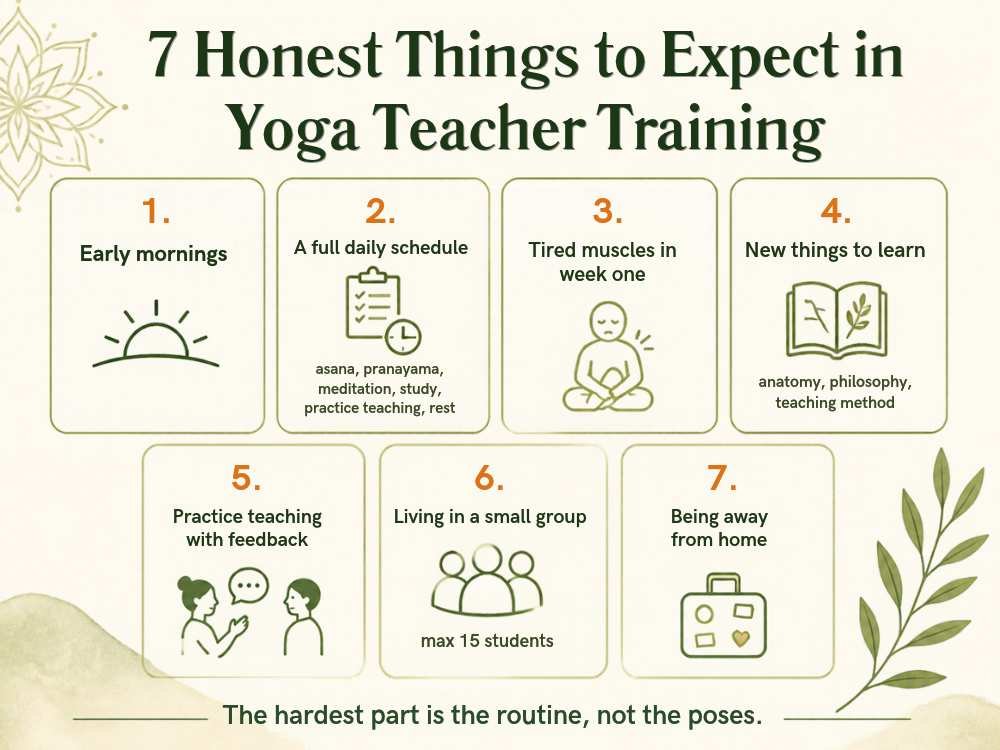
1. Early mornings
Most training days start early, because practice is best before the day warms up. If you usually wake late, start moving your wake-up time earlier a week or two before you arrive. Students receive the schedule for their course, and timings are tentative.
2. A full daily schedule
A day usually includes asana, pranayama, meditation, study, practice teaching and rest. It is a lot, but there is time to eat and rest. Timings can change with the weather and season.
3. Physical tiredness in the first week
Daily asana is more practice than most people do at home. Muscles can feel sore, and you may feel tired. This usually eases as the body adapts. Listen to your body, use the options your teacher shows and rest when you need to. If anything feels painful (not just tiring), tell your teacher.
4. Learning new things
You study anatomy basics, yoga philosophy and teaching methodology as well as practising. If you have not studied for a while, the reading and note-taking can feel heavy at first. Keep a small notebook, and ask questions in class.
5. Practice teaching
Teaching a class to fellow students can feel exposed at first. It begins in small pieces, and feedback is part of learning. Read our post on how practice teaching builds confidence. The course ends with a practical teaching assessment and no written exam.
6. Living in a group
You will spend nearly every hour with the same people. Shared rooms, shared meals and shared schedules take some patience. Many students say the group becomes a support. The 200-hour course has a maximum of 15 students.
7. Being away from home
Homesickness, missing family and the feeling of a different routine are normal. Wi-Fi is available, so you can stay in touch. Phones are not used during sessions, and many students find that one check-in time a day is enough. Meals are vegetarian and sattvic-inspired, so food is simple and regular.
How to prepare
- Practise before you arrive. Even 15 to 20 minutes a day helps.
- Adjust your sleep. Move your wake-up time earlier before you travel.
- Get a check-up if needed. Speak to your doctor first if you have an injury or health condition.
- Pack comfortably. Bring modest, comfortable clothing and a notebook.
- Arrive early. Give yourself a day to settle after travel before the course begins.
- Keep expectations gentle. You are there to learn, not to be perfect.
What makes it easier
- A teacher who explains clearly and gives options
- Time to rest between sessions
- Regular, simple food
- A small, supportive group
- Clear information before you arrive, including the schedule and what is included
Read what to ask a school in our guide to how to choose a yoga teacher training in Rishikesh.
Can I become a certified yoga teacher through the course?
Our school is registered with Yoga Alliance as an RYS 200 and RYS 300 school. Graduates of the 200-hour course can apply to register as 200-hour teachers, subject to Yoga Alliance’s own requirements and fees. A certificate does not guarantee teaching work, and rules differ by country.
Why do people choose a yoga teacher training?
Some want to teach. Many want a deeper personal practice, structured learning or time away from daily routine. All of these are good reasons, and you do not need to plan a teaching career to join.
Ready to start?
If you are wondering whether the course suits you, contact us and tell us about your experience and any worries. We can suggest the right level and explain the daily routine in detail. You can also read more on our yoga teacher training course in Rishikesh page.
Frequently asked questions
Is yoga teacher training hard? It is demanding but manageable for most healthy people who prepare. The main challenge is the daily routine, not advanced poses.
Is yoga teacher training hard for beginners? Beginners may find both the poses and the schedule new. A shorter course such as our 12-day 100-hour course can be a gentler start.
What is a typical day like? It usually includes asana, pranayama, meditation, study, practice teaching and rest.
Do I need to be flexible or strong? No. Teachers show options for different bodies, and flexibility and strength grow with practice.
Is there a written exam? No. Our 200-hour course ends with a practical teaching assessment.
What if I get injured or feel unwell? Tell your teacher straight away. Rest, and speak to a doctor if needed.